The Journal of Experimental Psychology: Applied just released a special issue on “Cognitive Factors in Healthcare.”
 In the introductory article Morrow and Durso (2011) report that while progress has been made in the human factors front related to patient safety, problems are likely to increase in the future due to: the aging of society, The Affordable care act which will put more patients into the system, and the adoption of technology that can assist safety but often increases the complexity of providing care especially when it is not consistent with clinician needs, goals and practices. One of the challenges to research in the healthcare safety arena is the inability to manipulate variables when there can be such real consequences (Morrow & Durso, 2011). Theories applicable to aviation which is more structured and engineered don’t always translate well into healthcare which is considered to be more of a socio-natural system (Morrow & Durso, 2011). My full review continues here…
Archive for the ‘Patient Safety’ Category
Articles Nurses may Never read…
In High Reliability Orgs, Human Factors, Interuptions, Patient Safety on September 25, 2011 at 4:39 pmHH
In human error, Patient Safety, Safety climate on September 25, 2011 at 8:00 amHand Hygiene?
Yes, but so much more. Please view this graphic entitled “Hospital Hazards” at Mark Graban’s Lean blog.

Award Season
In Patient Safety on August 6, 2011 at 9:31 pmThe National Quality Forum (NQF) and The Joint Commission are accepting applications for the 2011 John M. Eisenberg Patient Safety and Quality Awards. The awards recognize individuals, healthcare organizations, professional associations and healthcare collaboratives that are making significant contributions in improving the safety and quality of patient care.

Application forms for the John M. Eisenberg Patient Safety and Quality Awards are available at http://www.jointcommission.org and http://www.qualityforum.org. The deadline for submissions is October 3, 2011.
Child dies at urgent care clinic
In Patient Safety on August 6, 2011 at 9:25 pmApparently the closest children’s hospital was 30 miles away. Most of these procedures in a 6 yr old would be done there in the OR under anesthesia.
I can’t imagine what was done with the lidocaine but it seems a clinical guideline would have prevented this tragedy. Also children’s care is a specialty and there should be tighter control on the expertise required to treat them.
How transparent is transparency?
In Patient Safety on June 26, 2011 at 6:21 pmThe Reno Gazette Journal runs quite a few stories on patient safety in the Nevada heathcare system. An article posted online on June 19, reviews the mandatory state reporting situation of local hospitals. While the hospitals are posting many areas with zero defects, other pieces of evidence show a different story. They interview two women whose medical complications did not fall under the current reporting system. The journal also compared rates of error reported to billing info submitted to the state and found quite a discrepancy. Read the full story.
What do you think? Does mandatory reporting work? Does healthcare need more of an FAA-type body akin to aviation where incidents are investigated by outside sources if safety is really to be a priority? Can we really expect hospitals to engage in full disclose related to errors when their survival may depend on this data?? This article made me wonder if mandatory reporting may do more harm than good.. It’s like applying old theories of clinician error to entire systems ..publicly shame and sanction the system..hospitals will start looking for ways NOT to report or ways to reclassify their errors…
Evidence of Team Science
In Patient Safety on June 23, 2011 at 1:47 pmThere are few projects that can be completed in today’s complex healthcare delivery environments without the use of teams. But how many of these teams actually accomplish their goals? IS it the goal that is wrong or the team functioning?
A field of study the Science of Team Science is poised to develop theories, research and evidence based practice guidelines on team function. The National Cancer Institute has developed a free team science toolkit. The site includes training, tools, reference article links, and guidelines to help your safety teams improve their outputs. This site promises to be robust and interactive as it includes a blog and ways to connect with colleagues.
Check it out at Team Science Toolkit
The blog link is on the right side of the page.
For a site that just went live a couple of months ago there are already over 331 resources!
One interesting article link is entitled “Team science of nursing, engineering, statistics and practitioner in the development of a robotic reflexology device” (Wyatt, Sikorskii, Bush & Mukherjee, 2010).
NEws from IReland
In Patient Safety on May 6, 2011 at 9:38 amPatient Safety compromised by “cuts”
“Safe levels of patient care in hospitals and other healthcare settings across the State are being compromised by the moratorium on recruitment in the public sector, the general secretary of the Irish Nurses and Midwives Organisation has claimed…” Read at http://www.irishtimes.com/newspaper/breaking/2011/0504/breaking37.html
Review of “Do Strikes Kill?”
In I-O Psychology, Patient Safety, Resiliency, Safety climate on May 6, 2011 at 9:25 amHealthcare workers have had the right to strike since 1974. By 2008 there were over one million hospital union workers. While other industries had declining union memberships, hospital employees’ unionization is growing (Gruber & Kleiner, 2010).
Do Strikes Kill is the provocative title of a working paper by Jonathan Gruber and Sam Kleiner (MIT and Carnegie Mellon).
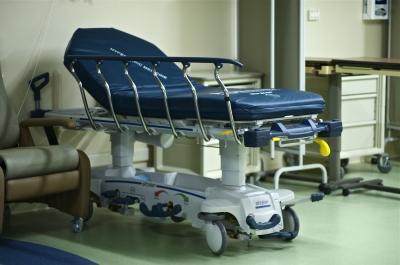 All hospital employees are imperative to providing safety in a hospital environment, but the authors looked at nurses in particular. They cite Kruger & Metzger (2002) when they describe that nurses function as “the surveillance system of hospitals for detection and intervention when patients deteriorate, and are viewed by many patients as more important to their total recuperation process than their own attending.” Another CEO was quoted as describing nurses as “the heart and soul of a hospital” (Gruber & Kleiner, 2010).
Given this integral role for nursing, the authors sought to determine the impact on safety and quality in the events of nursing work stoppages. They looked at data over a 20 year period in New York State. For patients admitted to hospitals during a nursing strike, the authors found MORTALITY increased by 19.4% and readmissions within 30 days increased by 6.5%.
I recommend purchasing this relevant study for $5 at the National Bureau of Economic Research website: http://www.nber.org/papers/w15855
To understand the safety implications for your own institutions, it is important to look at the details of this study and not just the overall results.
At one time, Industrial-Organizational psychologists were employed as union “avoidance consultants.” They had success through improving the work environment for employees. While labor lawyers can be a resource for a hospital in interpreting labor laws, an Industrial-Organizational Psychologist can combine theory and practice to improve culture, employee satisfaction, teamwork, front line empowerment, training, leadership approaches and development, quality and many other workplace happiness indicators. It’s the right thing to do but also Happy Employees aren’t likely to strike.
Spring Issue of Horizons
In Patient Safety on April 28, 2011 at 8:14 pmHorizons provides articles on specific topics of broad interest to the medical technology community, such as information technology, home healthcare, and human factors engineering.
 from their site:
TOPIC SPRING 2011: Alarm Systems
“Medical alarm systems warn of danger by alerting caregivers to critical medical information. They also frequently malfunction or are turned off, ignored, or unheard, earning a top spot on lists of the most frequent and serious problems seen with devices. How can the safety and effectiveness of alarms be improved?”
These are the planned topics:
2011 Alarm Systems Horizons – Editorial Content
The following articles are under development for the Spring 2011 issue of Alarm Systems Horizons:
- Why Clinical Alarms Are a ‘Top Ten’ Hazard: How You Can Help Reduce the Risk
- IEC 60601-1-8 Alarm Standard and Risk Management Considerations
- Alarm Systems in Critical Care: Highlights of the New International Standard for Critical Care Ventilators
- Understanding the Relationship between Cardiopulmonary Monitors and Clinically Significant Events in Critically Ill Children
- Physiologic Alarm Load on Med/Surg Floors of a Community Hospital
- Taking Alarm Standardization to the Floors: Demonstrating the Use of Telemetry In-Situ with a Training System
- The Patient Monitoring Conundrum: “Managing Alarms” Versus Managing Patients
- Pulse Oximetry Advanced Alarm Threshold
- An Evidence-Based Strategy to Reduce SPO2 Nuisance Alarms
- Visual and Auditory Perception Research: Implications for the Design, Selection, Use, and Maintenance of Alarms
- A Decentralized Hierarchical Network Model for Alarms
- Designing Effective Alarm Sounds
- Complementing Alarms with Useful Troubleshooting Guidance
- Clinical Alarm Hazards: Overview and Recommendations
- Using Modern Internet Techniques to Distribute Alarms
- Use of Mobile Devices to Improve Alarm Systems
- Functional Basics of Third-Party Alerting Alarming Systems
- Advancing the Functionality of Medical Alarms
Fogg on Behavior Change
In Patient Safety on April 23, 2011 at 7:50 amI recently heard BJ Fogg speak at a design conference. He has facsinating material on persuasion.
He also has developed a great model of behavior change which I feel could help redesign heathcare worker’s behavior in terms of safety practices.
Here is a link to his model http://www.behaviormodel.org/
Here is a link to his behavior grid http://www.behaviorgrid.org/

Here is a link to his interactive behvavior change wizard http://www.behaviorwizard.org/wp/
Book on Mobile persuasion http://mobilepersuasion.com/
Fortune named him a guru! http://money.cnn.com/galleries/2008/fortune/0811/gallery.10_new_gurus.fortune/


 Safety Dog's Blog